Reverse Mortgage California Guide
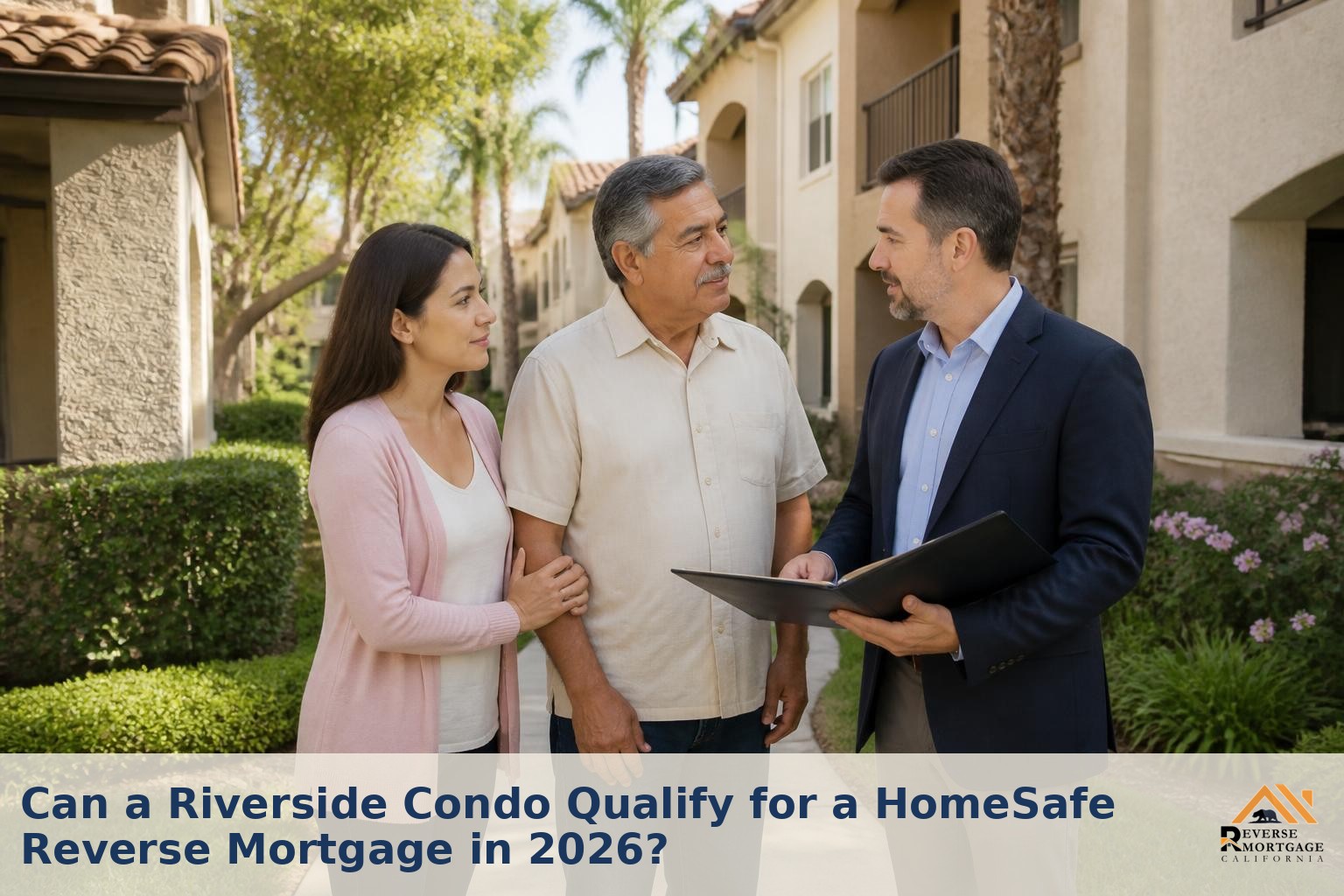
Can a Riverside Condo Qualify for a HomeSafe Reverse Mortgage in 2026?
Last updated: 2026 | Sources: HomeSafe_Underwriting_Manual.pdf | Author: George Kfoury, NMLS# 365129
reverse mortgage Riverside seniors often need clear answers about property review before deciding whether a proprietary loan fits a retirement plan. This guide explains the HomeSafe rules behind condominiums questions and shows how those rules may affect California homeowners in 2026.
According to the cited HomeSafe source material, these rules are program-specific and should be verified against current underwriting before a borrower relies on them. The examples below are educational, compliance-conscious, and focused on practical conversations for Riverside households.
Introduction
Riverside condo owners often discover that the property review can be just as important as borrower eligibility. A proprietary reverse mortgage may require proof that the condominium project is acceptable, and the review can involve agency approval, insurance, reserve funding, and current project documents.
This guide covers five HomeSafe condominium facts from the HomeSafe Underwriting Manual, Condominiums section, page 29, revised April 2026. It is written for California seniors and their families who want to understand what may come up before ordering reports or waiting on an HOA packet.
The central point is that a condo is not reviewed only by looking at the individual unit. The project, association, insurance coverage, questionnaire timing, and financial reserves may all matter, so Riverside borrowers should gather HOA details early.
This guide covers 5 specific topics within condominiums, each based on the official source material and applicable to California borrowers as of 2026.
1. What condo approval is acceptable for HomeSafe?
Answer: HomeSafe recognizes agency condominium approvals from FHA, VA, Fannie Mae, Freddie Mac, or FOA, with an approved condominium questionnaire dated within 90 days of closing.
Source: HomeSafe_Underwriting_Manual.pdf, Condominiums, page 29, current as of 2026.
How this looks in practice
A Riverside condo owner should ask the HOA or management company whether the project has FHA, VA, Fannie Mae, Freddie Mac, or FOA approval, and whether a current condominium questionnaire can be completed. The HomeSafe fact also ties the questionnaire date to 90 days of closing, so timing matters.
For a Riverside homeowner, this is best treated as an early checklist item. It may be simple to document, but waiting until the end of the process can turn a straightforward question into a delay.
Key numbers
- Recognized approvals: FHA, VA, Fannie Mae, Freddie Mac, or FOA
- Questionnaire dated within 90 days of closing
- Condominiums page: 29
2. What if my condo project is not agency approved for HomeSafe?
Answer: A HomeSafe condominium project without agency approval must undergo a full condominium project review.
Source: HomeSafe_Underwriting_Manual.pdf, Condominiums, page 29, current as of 2026.
How this looks in practice
If the condo project does not have acceptable agency approval, the file should not be treated like a simple detached-home review. A full HomeSafe condominium project review may be required, which can add document requests and make HOA responsiveness important.
For a Riverside homeowner, this is best treated as an early checklist item. It may be simple to document, but waiting until the end of the process can turn a straightforward question into a delay.
Key numbers
- No agency approval: full project review required
- Condominiums page: 29
- Guideline date: Revised April 2026
3. What liability insurance is required for a HomeSafe condo project?
Answer: A full HomeSafe condominium project review requires liability insurance of at least $1 million.
Source: HomeSafe_Underwriting_Manual.pdf, Condominiums, page 29, current as of 2026.
How this looks in practice
During a full project review, the association liability policy is not just background paperwork. HomeSafe requires liability insurance of at least $1 million, so a borrower or advisor should check the certificate instead of assuming the association coverage is sufficient.
For a Riverside homeowner, this is best treated as an early checklist item. It may be simple to document, but waiting until the end of the process can turn a straightforward question into a delay.
Key numbers
- Liability insurance: at least $1 million
- Full project review item
- Condominiums page: 29
4. What master hazard coverage is required for a HomeSafe condo?
Answer: A full HomeSafe condominium project review requires a master hazard policy with at least $1 million coverage or replacement cost coverage.
Source: HomeSafe_Underwriting_Manual.pdf, Condominiums, page 29, current as of 2026.
How this looks in practice
The master hazard policy also needs attention during a full condominium review. HomeSafe calls for at least $1 million of master hazard coverage or replacement cost coverage, and the exact language on the insurance certificate can matter.
For a Riverside homeowner, this is best treated as an early checklist item. It may be simple to document, but waiting until the end of the process can turn a straightforward question into a delay.
Key numbers
- Master hazard: at least $1 million or replacement cost coverage
- Full project review item
- Condominiums page: 29
5. How much reserve funding is required for a HomeSafe condo review?
Answer: A full HomeSafe condominium project review requires reserve funds representing at least 10% of the budget.
Source: HomeSafe_Underwriting_Manual.pdf, Condominiums, page 29, current as of 2026.
How this looks in practice
Reserve funding is a financial-health signal for the condominium project. HomeSafe requires reserve funds representing at least 10% of the budget in a full condo project review, so the HOA budget and reserve line should be reviewed early.
For a Riverside homeowner, this is best treated as an early checklist item. It may be simple to document, but waiting until the end of the process can turn a straightforward question into a delay.
Key numbers
- Reserve funds: at least 10% of budget
- Full project review item
- Condominiums page: 29
Frequently Asked Questions
What condo approval is acceptable for HomeSafe?
HomeSafe recognizes agency condominium approvals from FHA, VA, Fannie Mae, Freddie Mac, or FOA, with an approved condominium questionnaire dated within 90 days of closing. Condo documentation can take time, so borrowers should involve the HOA or management company early.
What if my condo project is not agency approved for HomeSafe?
A HomeSafe condominium project without agency approval must undergo a full condominium project review. Condo documentation can take time, so borrowers should involve the HOA or management company early.
What liability insurance is required for a HomeSafe condo project?
A full HomeSafe condominium project review requires liability insurance of at least $1 million. Condo documentation can take time, so borrowers should involve the HOA or management company early.
What master hazard coverage is required for a HomeSafe condo?
A full HomeSafe condominium project review requires a master hazard policy with at least $1 million coverage or replacement cost coverage. Condo documentation can take time, so borrowers should involve the HOA or management company early.
How much reserve funding is required for a HomeSafe condo review?
A full HomeSafe condominium project review requires reserve funds representing at least 10% of the budget. Condo documentation can take time, so borrowers should involve the HOA or management company early.
About Reverse Mortgage California
Reverse Mortgage California (NMLS# 2530594) is the consumer-facing DBA and brand of O1ne Mortgage Inc. The company focuses on helping California seniors understand reverse mortgage options, including federally insured HECM loans and proprietary alternatives where appropriate.
Call or text (909) 642-8258 or visit reversemortgagecali.com.
Find us on Google for our location, hours, and directions.
About George Kfoury
George Kfoury (NMLS# 365129) has been licensed in the mortgage industry since 2003 and helps senior homeowners across California understand reverse mortgage and retirement mortgage options through Reverse Mortgage California.
He serves homeowners statewide, with local relevance in Riverside and throughout California. Learn more about George Kfoury, view the Los Angeles Google Business Profile, or call (909) 642-8258.