Reverse Mortgage California Guide
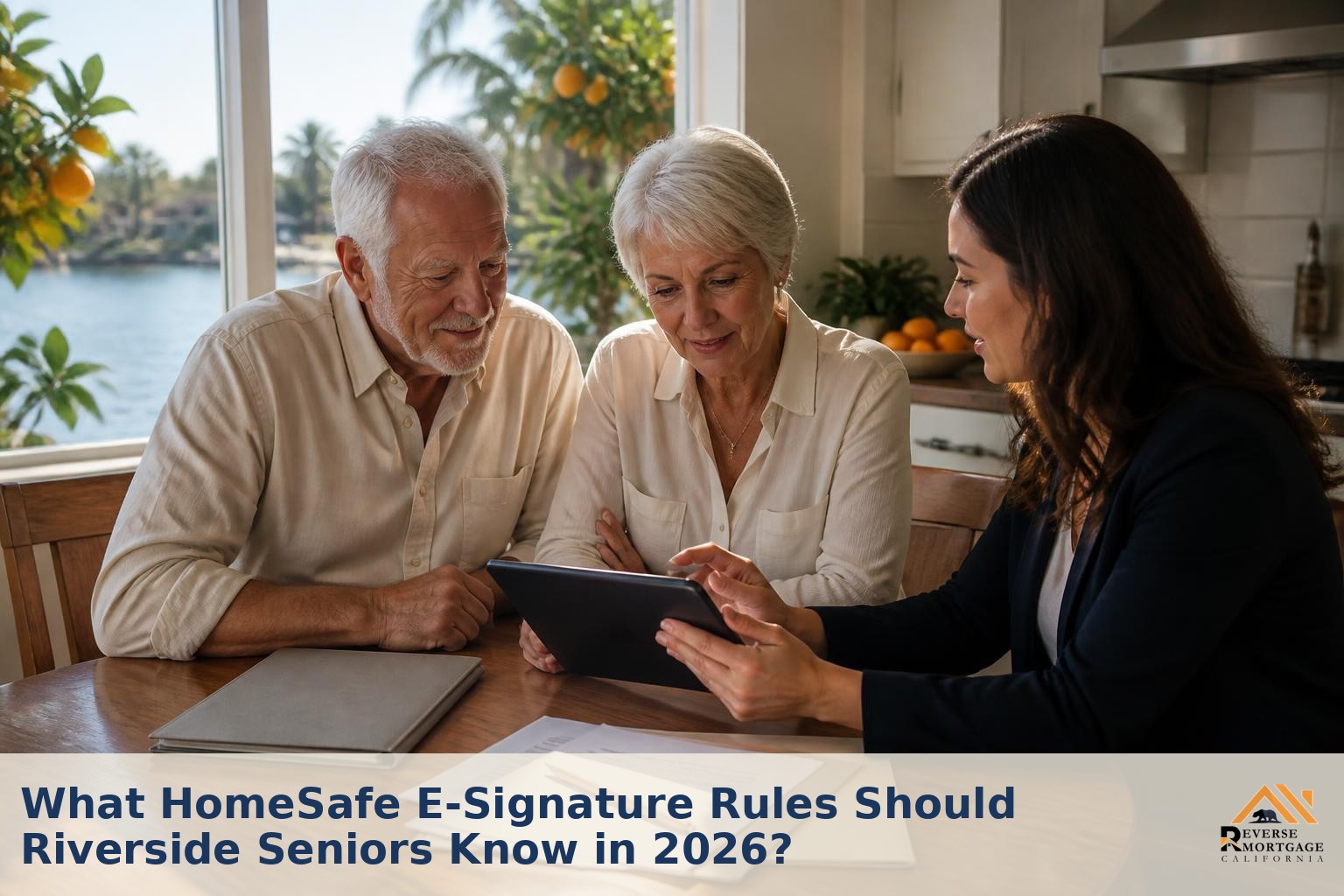
What HomeSafe E-Signature Rules Should Riverside Seniors Know in 2026?
Last updated: 2026 | Sources: HomeSafe Underwriting Manual, California reverse mortgage guidance | Author: George Kfoury, NMLS# 365129
Reverse mortgage Riverside seniors often need answers that are specific to the product, the property, and the documents in the file. This guide explains electronic signature requirements rules that can affect HomeSafe decisions in 2026.
For borrowers who prefer digital paperwork, the details below explain where electronic convenience stops and formal signing controls begin. Before relying on this electronic signature requirements rule set, confirm current proprietary program requirements with a licensed professional.
Introduction
Electronic signatures can make a reverse mortgage process easier for Riverside seniors, especially when family members, advisors, and loan staff are not all in the same place. HomeSafe still sets boundaries around which documents may be signed electronically, what proof must be captured, and when a borrower cannot use e-signature delivery.
This 2026 guide explains five e-signature requirements in plain language. The goal is not to turn borrowers into document technicians. It is to help seniors know why a lender may ask for a personal email address, why some papers still need wet signatures, and why an audit trail matters if the package is later reviewed.
This guide covers 5 specific topics within safeguards, each based on official source material and written for California borrowers as of 2026.
1. What must a HomeSafe e-signature audit trail show?
Answer: A HomeSafe e-signature audit trail must document borrower name and IP address, borrower consent, clear date and time stamp, and evidence of electronic signing.
Source: HomeSafe_Underwriting_Manual.pdf, Electronic Signature Requirements, page 15, Revised April 2026.
How this looks in practice
A proper e-signature process leaves a trail that shows who signed, when they consented, and how the act of signing was recorded. Riverside borrowers should expect the platform to capture identifying details rather than treating the signature as a casual email approval.
For Riverside seniors, the best next step is to document this item before the file is priced or scheduled.
Key numbers
- Borrower name (as of 2026)
- IP address (as of 2026)
- date and time stamp (as of 2026)
2. Can HomeSafe closing documents be e-signed?
Answer: HomeSafe closing documents require live signatures and cannot be e-signed.
Source: HomeSafe_Underwriting_Manual.pdf, Electronic Signature Requirements, page 16, Revised April 2026.
How this looks in practice
Closing documents are different from many early disclosures. Even if earlier HomeSafe papers can be completed electronically, the cited rule says closing documents need live signatures, so borrowers should plan for an appointment rather than assuming the entire process can finish online.
A borrower should ask how the current HomeSafe guideline is being applied instead of relying on a rule from another reverse mortgage product.
Key numbers
- Live closing signatures (as of 2026)
3. Can I e-sign HomeSafe documents if I do not have email?
Answer: A borrower who states they do not have an email address is ineligible for electronic signature packages.
Source: HomeSafe_Underwriting_Manual.pdf, Electronic Signature Requirements, page 15, Revised April 2026.
How this looks in practice
A borrower without an email address may need paper or another approved process instead of an electronic package. This can surprise seniors who use a family member for online tasks, but the e-signature rule is tied to the borrower's own ability to receive and complete the package.
This is a useful checkpoint for the first eligibility conversation because it can shape what the lender asks for next.
Key numbers
- Borrower email required for e-sign (as of 2026)
4. Can someone else's email be used for my HomeSafe e-signature package?
Answer: A HomeSafe borrower cannot use an email address that belongs or appears to belong to someone else for e-signature delivery.
Source: HomeSafe_Underwriting_Manual.pdf, Electronic Signature Requirements, page 15, Revised April 2026.
How this looks in practice
Using another person's email address can create a serious authenticity problem. If the address appears to belong to a child, caregiver, or friend, the lender may be unable to treat the package as a valid borrower e-signature delivery.
One practical risk is straightforward: Using another person's email can invalidate the e-signature process. The file should be screened around this point before closing timing or cash-flow plans are discussed as likely outcomes.
Key numbers
- No third-party email (as of 2026)
5. Can notarized HomeSafe documents be e-signed?
Answer: Electronic signatures are not acceptable on any HomeSafe document requiring notarization.
Source: HomeSafe_Underwriting_Manual.pdf, Electronic Signature Requirements, page 16, Revised April 2026.
How this looks in practice
Notarized documents remain outside the e-signature permission described in the cited HomeSafe rule. A Riverside homeowner should expect any notarization step to require the correct live signing process, identity checks, and document handling.
Keeping the source rule tied to the actual file helps prevent avoidable delays when underwriting starts asking for support.
Key numbers
- Notarized documents: no e-sign (as of 2026)
Frequently Asked Questions
What must a HomeSafe e-signature audit trail show?
A HomeSafe e-signature audit trail must document borrower name and IP address, borrower consent, clear date and time stamp, and evidence of electronic signing.
Can HomeSafe closing documents be e-signed?
HomeSafe closing documents require live signatures and cannot be e-signed.
Can I e-sign HomeSafe documents if I do not have email?
A borrower who states they do not have an email address is ineligible for electronic signature packages.
Can someone else's email be used for my HomeSafe e-signature package?
A HomeSafe borrower cannot use an email address that belongs or appears to belong to someone else for e-signature delivery.
Can notarized HomeSafe documents be e-signed?
Electronic signatures are not acceptable on any HomeSafe document requiring notarization.
Can a family member manage e-signing for me?
A family member can help you understand the process, but the borrower must use an acceptable borrower email and complete the signature package properly. An email that belongs to someone else can make the e-signature package ineligible.
About Reverse Mortgage California
Reverse Mortgage California (NMLS# 2530594) is the consumer-facing DBA and brand of O1ne Mortgage Inc. The company helps California seniors compare reverse mortgage and retirement mortgage options with careful attention to federal, state, and product-specific rules.
Call or text (909) 642-8258 or visit reversemortgagecali.com.
Find us on Google for our location, hours, and directions.
About George Kfoury
George Kfoury (NMLS# 365129) has been licensed in the mortgage industry since 2003 and serves California seniors through Reverse Mortgage California.
He helps homeowners in Riverside and throughout California understand reverse mortgage and retirement mortgage options in clear language. Learn more about George Kfoury, view the Google Business Profile, or call (909) 642-8258.