Reverse Mortgage California Guide
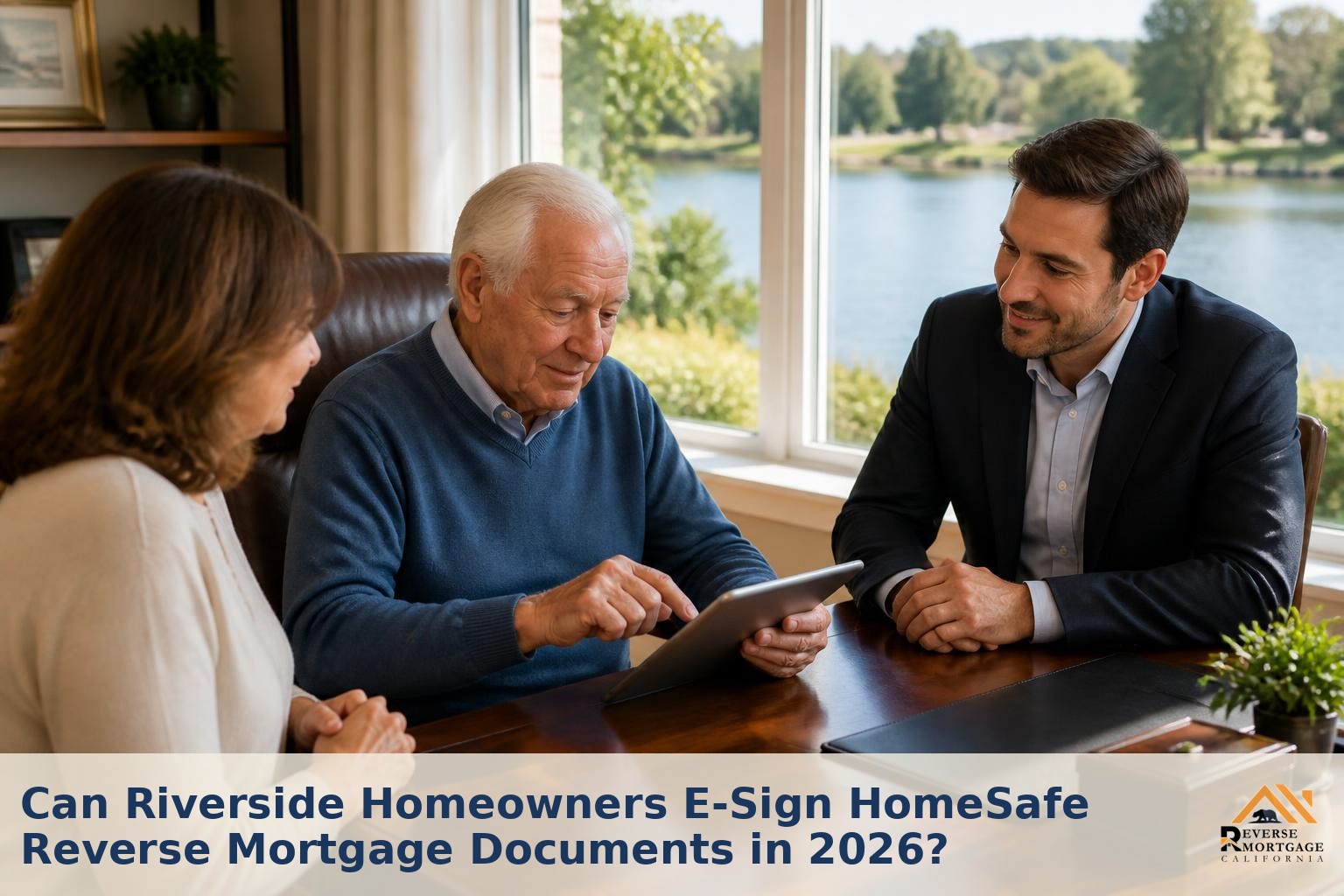
Can Riverside Homeowners E-Sign HomeSafe Reverse Mortgage Documents in 2026?
Last updated: 2026 | Sources: HomeSafe Underwriting Manual, HUD HECM program rules, California reverse mortgage disclosures | Author: George Kfoury, NMLS# 365129
Riverside seniors may appreciate the convenience of electronic signatures, but HomeSafe does not treat every document the same way. Some packages can use e-signatures only when identity, consent, email delivery, and audit evidence are properly documented.
This 2026 guide explains five electronic-signature safeguards from the HomeSafe manual so Riverside homeowners can prepare for what can be signed online and what still requires live or notarized handling.
Introduction
Digital convenience can reduce travel and scheduling stress, especially for older homeowners who prefer to review documents at home. Reverse mortgage files, however, also involve safeguards that protect consent, identity, and the integrity of closing documents.
The HomeSafe rules below are not general technology tips. They are specific program requirements from the Electronic Signature Requirements section of the manual, and each fact should be confirmed against the actual document package.
For Riverside borrowers, the practical lesson is simple: have a personal email account, expect the system to track consent and signing evidence, and do not assume that closing or notarized documents can be handled electronically.
1. What must a HomeSafe e-signature audit trail show?
Answer: A HomeSafe e-signature audit trail must document borrower name and IP address, borrower consent, clear date and time stamp, and evidence of electronic signing.
An audit trail is the record that supports the electronic signature. It shows who signed, when they signed, how consent was captured, and what technical evidence ties the signer to the event.
The cited HomeSafe guideline lists several required data points, which means the process is more formal than clicking a link without a record.
Source: HomeSafe_Underwriting_Manual.pdf, Electronic Signature Requirements, page 15, current as of 2026.
How this looks in practice
A Riverside borrower should use a stable device and personal email account, then complete the signing process without handing control to another person. That keeps the audit trail aligned with the borrower.
If a family member is helping with technology, they can sit nearby and explain the screen, but the borrower should still provide consent and sign for themselves.
Key numbers
- Borrower name
- IP address
- Date and time stamp
2. Can HomeSafe closing documents be e-signed?
Answer: HomeSafe closing documents require live signatures and cannot be e-signed.
The program separates many pre-closing workflow items from final closing documents. Under the cited rule, closing documents require live signatures.
That distinction helps borrowers avoid a last-minute surprise when an earlier package was electronic but the final appointment is not.
Source: HomeSafe_Underwriting_Manual.pdf, Electronic Signature Requirements, page 16, current as of 2026.
How this looks in practice
A Riverside senior who has been e-signing disclosures should still plan for a live signing appointment when closing documents are ready. Transportation, caregiver timing, and notary logistics should be discussed early.
If travel is difficult, ask the loan team what signing arrangements are available instead of assuming the closing package will arrive by email.
Key numbers
- Live signatures required
3. Can I e-sign HomeSafe documents if I do not have email?
Answer: A borrower who states they do not have an email address is ineligible for electronic signature packages.
Electronic delivery depends on an email destination tied to the borrower. Without an email address, the cited guideline says the borrower is not eligible for electronic signature packages.
That does not necessarily end the reverse mortgage conversation, but it changes how documents must be delivered and signed.
Source: HomeSafe_Underwriting_Manual.pdf, Electronic Signature Requirements, page 15, current as of 2026.
How this looks in practice
A Riverside homeowner who rarely uses email should not create an account casually during a rushed appointment. It is better to set up access early, practice logging in, and understand how messages will arrive.
If the borrower does not want email at all, the loan team should discuss paper or live-signature alternatives where allowed by the product and document type.
Key numbers
- Email address required for e-sign packages
4. Can someone else's email be used for my HomeSafe e-signature package?
Answer: A HomeSafe borrower cannot use an email address that belongs or appears to belong to someone else for e-signature delivery.
The email address is part of the delivery and identity trail. If it belongs to a child, caregiver, assistant, or other third party, the e-signature process may not reflect the borrower as the signer.
The guideline even covers addresses that appear to belong to someone else, so name mismatches can create questions before signing begins.
Source: HomeSafe_Underwriting_Manual.pdf, Electronic Signature Requirements, page 15, current as of 2026.
How this looks in practice
A Riverside borrower using a shared family email should ask whether a new personal account is needed for electronic documents. The goal is to avoid a package being rejected after time has been spent reviewing it.
A helper can still assist with reading or organization, but the electronic delivery address should belong to the borrower when an e-sign package is used.
Key numbers
- Borrower-controlled email
5. Can notarized HomeSafe documents be e-signed?
Answer: Electronic signatures are not acceptable on any HomeSafe document requiring notarization.
Notarization adds a separate identity and witnessing requirement. The cited HomeSafe rule states that electronic signatures are not acceptable for documents requiring notarization.
This is another reason borrowers should separate convenience documents from formal closing or notarized items when planning the timeline.
Source: HomeSafe_Underwriting_Manual.pdf, Electronic Signature Requirements, page 16, current as of 2026.
How this looks in practice
A Riverside homeowner may be able to handle some early disclosures electronically and still need a wet signature for notarized paperwork. That mixed process is normal when the product rules require it.
Before scheduling travel or caregiver support, ask which documents require notarization so the signing appointment matches the actual file requirements.
Key numbers
- Notarized documents excluded
Frequently Asked Questions
What must a HomeSafe e-signature audit trail show?
The audit trail must document borrower name and IP address, borrower consent, a clear date and time stamp, and evidence of electronic signing.
Can HomeSafe closing documents be e-signed?
No. HomeSafe closing documents require live signatures and cannot be e-signed.
Can I e-sign HomeSafe documents if I do not have email?
No. A borrower who says they do not have an email address is ineligible for HomeSafe electronic signature packages.
Can someone else's email be used for my HomeSafe e-signature package?
No. A HomeSafe borrower cannot use an email address that belongs or appears to belong to someone else for e-signature delivery.
Can notarized HomeSafe documents be e-signed?
No. Electronic signatures are not acceptable on any HomeSafe document that requires notarization.
About Reverse Mortgage California
Reverse Mortgage California (NMLS# 2530594) is the consumer-facing DBA and brand of O1ne Mortgage Inc. The team focuses on clear, compliant education for California homeowners age 55 and older who want to understand reverse mortgage options, proprietary programs, and HECM counseling requirements.
Call or text (909) 642-8258 or visit reversemortgagecali.com.
Find us on Google for our location, hours, and directions.
About George Kfoury
George Kfoury (NMLS# 365129) has been licensed in the mortgage industry since 2003 and serves California seniors through Reverse Mortgage California.
He helps homeowners compare program details, prepare practical questions, and understand when an underwriting guideline needs a file-specific review. Learn more about George Kfoury, or call (909) 642-8258.