Reverse Mortgage California Guide
How Do Solar Panels Affect HomeSafe Reverse Mortgage Property Review in Los Angeles in 2026?
Last updated: 2026 | Sources: HomeSafe_Underwriting_Manual.pdf, Solar – Leases, Liens, and Power Purchase Agreements, page 133, Revised April 2026 | Author: George Kfoury, NMLS# 365129
reverse mortgage Los Angeles seniors often need a clear explanation of product details before deciding whether a loan conversation is worth pursuing. This 2026 guide focuses on solar – leases, liens, and power purchase agreements questions for California homeowners.
Los Angeles homeowners often balance high housing values, older lien histories, and family planning questions while deciding whether a reverse mortgage product deserves a closer look. The points below cite the underwriting source inline so readers can separate documented rules from general impressions.
Introduction
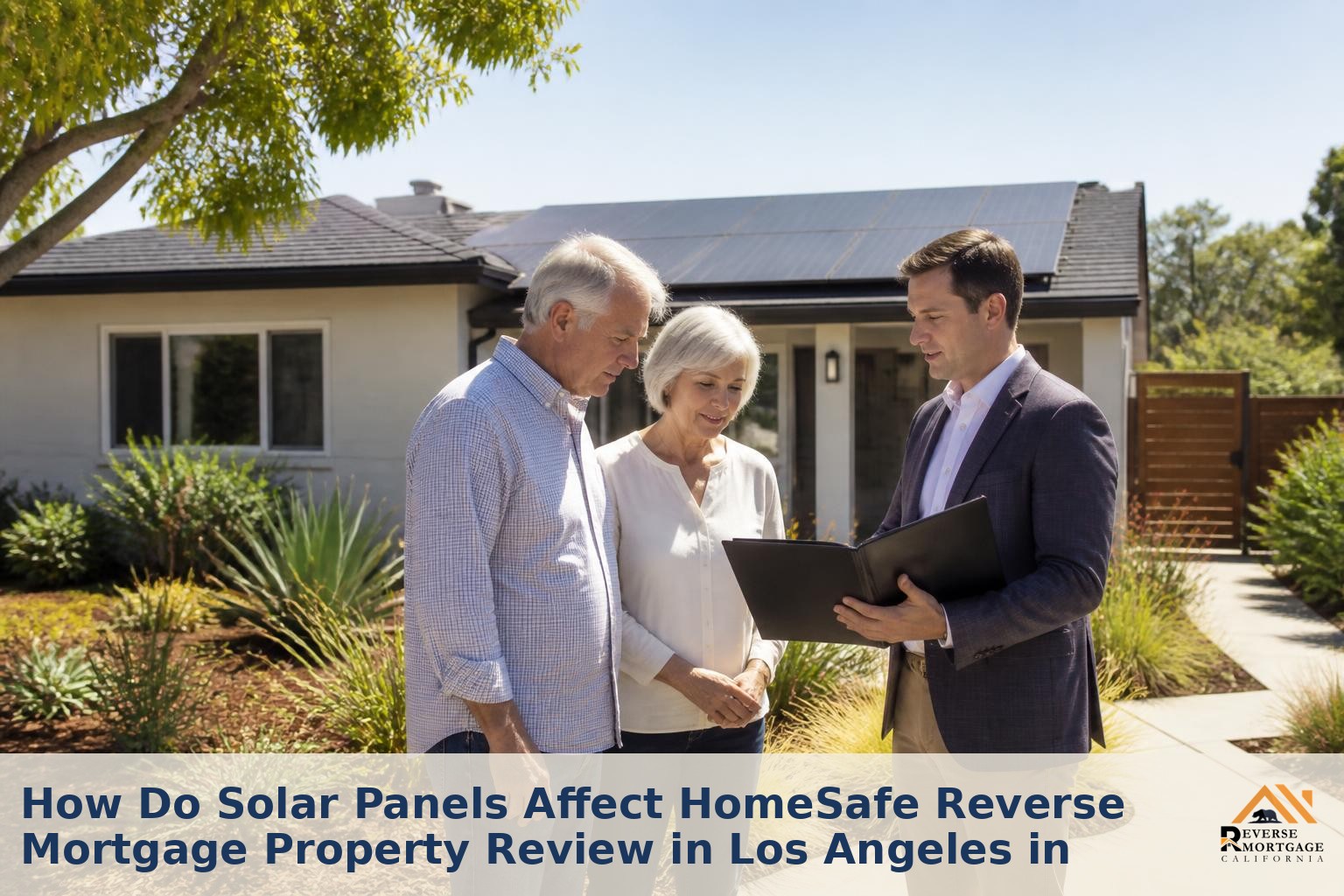
Solar panels are common across Los Angeles, but a reverse mortgage review does not treat every system the same way. HomeSafe guidance looks at ownership, appraisal value, title recordings, payoff timing, and transfer restrictions.
This article explains five solar-related rules that can affect a proprietary reverse mortgage file. The homeowner may think of solar as a utility upgrade, while the underwriter must decide how it affects value and marketability.
Bring the solar contract, payoff information, and title details early so these issues are handled before closing pressure builds.
1. Do leased solar panels count in HomeSafe value?
Answer: Leased solar equipment is not included in HomeSafe market value by the appraiser.
Source: HomeSafe_Underwriting_Manual.pdf, Solar – Leases, Liens, and Power Purchase Agreements, page 133, Revised April 2026.
How this looks in practice
In Los Angeles, leased solar is common because many homeowners added panels without buying the system outright. The cited HomeSafe rule tells the appraiser not to include leased solar mechanical systems or components in market value, so the panels may lower utility bills without increasing the value used for the loan review. Source: HomeSafe_Underwriting_Manual.pdf, Solar – Leases, Liens, and Power Purchase Agreements, page 133, Revised April 2026.
That can surprise families who think any solar installation automatically helps equity. Compare the lease documents with the appraisal treatment before estimating proceeds. Source: HomeSafe_Underwriting_Manual.pdf, Solar – Leases, Liens, and Power Purchase Agreements, page 133, Revised April 2026.
The safest approach is to document this point in writing and ask how it interacts with the rest of the file for the specific Los Angeles property.
Key numbers
- Leased solar value: excluded (as of 2026)
- Page 133 source rule (as of 2026)
2. Can solar panels add value for HomeSafe?
Answer: Solar value may be included only when the borrower fully owns the system and it is legally part of the property.
Source: HomeSafe_Underwriting_Manual.pdf, Solar – Leases, Liens, and Power Purchase Agreements, page 133, Revised April 2026.
How this looks in practice
Owned solar is treated differently from leased solar. Under the cited HomeSafe guidance, the appraiser may include solar value only when the borrower owns the system in full and it is legally part of the property. Source: HomeSafe_Underwriting_Manual.pdf, Solar – Leases, Liens, and Power Purchase Agreements, page 133, Revised April 2026.
For a Los Angeles property, receipts, payoff letters, title records, permits, and ownership paperwork matter. A permanent-looking system still needs proof. Source: HomeSafe_Underwriting_Manual.pdf, Solar – Leases, Liens, and Power Purchase Agreements, page 133, Revised April 2026.
The safest approach is to document this point in writing and ask how it interacts with the rest of the file for the specific Los Angeles property.
Key numbers
- 100% borrower ownership required (as of 2026)
- Legally part of property (as of 2026)
3. When is a solar UCC-3 filed if HomeSafe pays off solar financing?
Answer: For financed solar payoff, the creditor may file the UCC-3 after HomeSafe closing once payoff funds are received, subject to post-closing confirmation.
Source: HomeSafe_Underwriting_Manual.pdf, Solar – Leases, Liens, and Power Purchase Agreements, page 134, Revised April 2026.
How this looks in practice
Solar financing often creates title questions even when the homeowner plans to pay it off with loan proceeds. The HomeSafe guidance allows the creditor to file the UCC-3 after closing once payoff funds are received, with a post-closing condition confirming release. Source: HomeSafe_Underwriting_Manual.pdf, Solar – Leases, Liens, and Power Purchase Agreements, page 134, Revised April 2026.
This can keep a file moving, but it also creates follow-up responsibility. Los Angeles borrowers should know who tracks the UCC-3 confirmation. Source: HomeSafe_Underwriting_Manual.pdf, Solar – Leases, Liens, and Power Purchase Agreements, page 134, Revised April 2026.
The safest approach is to document this point in writing and ask how it interacts with the rest of the file for the specific Los Angeles property.
Key numbers
- UCC-3 after payoff funds (as of 2026)
- Post-closing confirmation (as of 2026)
4. Can a solar lease make a HomeSafe property ineligible?
Answer: A solar lease or PPA can make the property ineligible if its transfer restrictions conflict with proprietary guidelines.
Source: HomeSafe_Underwriting_Manual.pdf, Solar – Leases, Liens, and Power Purchase Agreements, page 133, Revised April 2026.
How this looks in practice
Some solar leases and power purchase agreements include transfer restrictions that affect a future sale or title change. The cited HomeSafe rule says the property is ineligible when those restrictions conflict with proprietary guidelines. Source: HomeSafe_Underwriting_Manual.pdf, Solar – Leases, Liens, and Power Purchase Agreements, page 133, Revised April 2026.
That is why the solar contract deserves early review, not a last-minute glance. A restriction that seems administrative to the homeowner can become a loan-stopping issue if it limits transfer in a way the program will not accept. Source: HomeSafe_Underwriting_Manual.pdf, Solar – Leases, Liens, and Power Purchase Agreements, page 133, Revised April 2026.
Risk note: Restrictive solar agreements can stop loan approval. That does not mean the homeowner has no options, but it does mean the issue should be handled before quoting a likely outcome.
Key numbers
- Conflicting transfer restriction: ineligible (as of 2026)
- Lease or PPA review (as of 2026)
5. What happens if a solar UCC-1 is recorded on title for HomeSafe?
Answer: When a solar lease or PPA has a UCC-1 recorded against the property, a UCC-3 release is required before closing.
Source: HomeSafe_Underwriting_Manual.pdf, Solar – Leases, Liens, and Power Purchase Agreements, page 134, Revised April 2026.
How this looks in practice
A recorded UCC-1 can appear as part of the solar arrangement and has to be addressed before closing. The HomeSafe source says a UCC-3 release is required before closing when a UCC-1 is recorded against the subject property for a solar lease or PPA. Source: HomeSafe_Underwriting_Manual.pdf, Solar – Leases, Liens, and Power Purchase Agreements, page 134, Revised April 2026.
For Los Angeles homeowners, the practical step is to review the preliminary title report and solar paperwork together. If a release is needed, ordering it early can prevent a clean file from stalling at the closing stage. Source: HomeSafe_Underwriting_Manual.pdf, Solar – Leases, Liens, and Power Purchase Agreements, page 134, Revised April 2026.
The safest approach is to document this point in writing and ask how it interacts with the rest of the file for the specific Los Angeles property.
Key numbers
- UCC-3 required before closing (as of 2026)
- Recorded UCC-1 trigger (as of 2026)
Frequently Asked Questions
Do leased solar panels count in HomeSafe value?
Leased solar equipment is not included in HomeSafe market value by the appraiser. Confirm the current file against HomeSafe_Underwriting_Manual.pdf, Solar – Leases, Liens, and Power Purchase Agreements, page 133, Revised April 2026 before relying on this point.
Can solar panels add value for HomeSafe?
Solar value may be included only when the borrower fully owns the system and it is legally part of the property. Confirm the current file against HomeSafe_Underwriting_Manual.pdf, Solar – Leases, Liens, and Power Purchase Agreements, page 133, Revised April 2026 before relying on this point.
When is a solar UCC-3 filed if HomeSafe pays off solar financing?
For financed solar payoff, the creditor may file the UCC-3 after HomeSafe closing once payoff funds are received, subject to post-closing confirmation. Confirm the current file against HomeSafe_Underwriting_Manual.pdf, Solar – Leases, Liens, and Power Purchase Agreements, page 134, Revised April 2026 before relying on this point.
Can a solar lease make a HomeSafe property ineligible?
A solar lease or PPA can make the property ineligible if its transfer restrictions conflict with proprietary guidelines. Confirm the current file against HomeSafe_Underwriting_Manual.pdf, Solar – Leases, Liens, and Power Purchase Agreements, page 133, Revised April 2026 before relying on this point.
What happens if a solar UCC-1 is recorded on title for HomeSafe?
When a solar lease or PPA has a UCC-1 recorded against the property, a UCC-3 release is required before closing. Confirm the current file against HomeSafe_Underwriting_Manual.pdf, Solar – Leases, Liens, and Power Purchase Agreements, page 134, Revised April 2026 before relying on this point.
About Reverse Mortgage California
Reverse Mortgage California (NMLS# 2530594) is the consumer-facing DBA and brand of O1ne Mortgage Inc. The company helps California seniors compare reverse mortgage choices, understand required counseling, and review loan questions in plain language.
Call or text (909) 642-8258 or visit reversemortgagecali.com.
Find us on Google for our location, hours, and directions.
About George Kfoury
George Kfoury (NMLS# 365129) has been licensed in the mortgage industry since 2003 and serves California seniors through Reverse Mortgage California.
He helps homeowners in Los Angeles and across the state understand reverse mortgage and retirement mortgage options before they decide whether to move forward. For Los Angeles homeowners, the solar paperwork should be treated as part of the property file, not as an afterthought.