
HomeSafe Property Guide
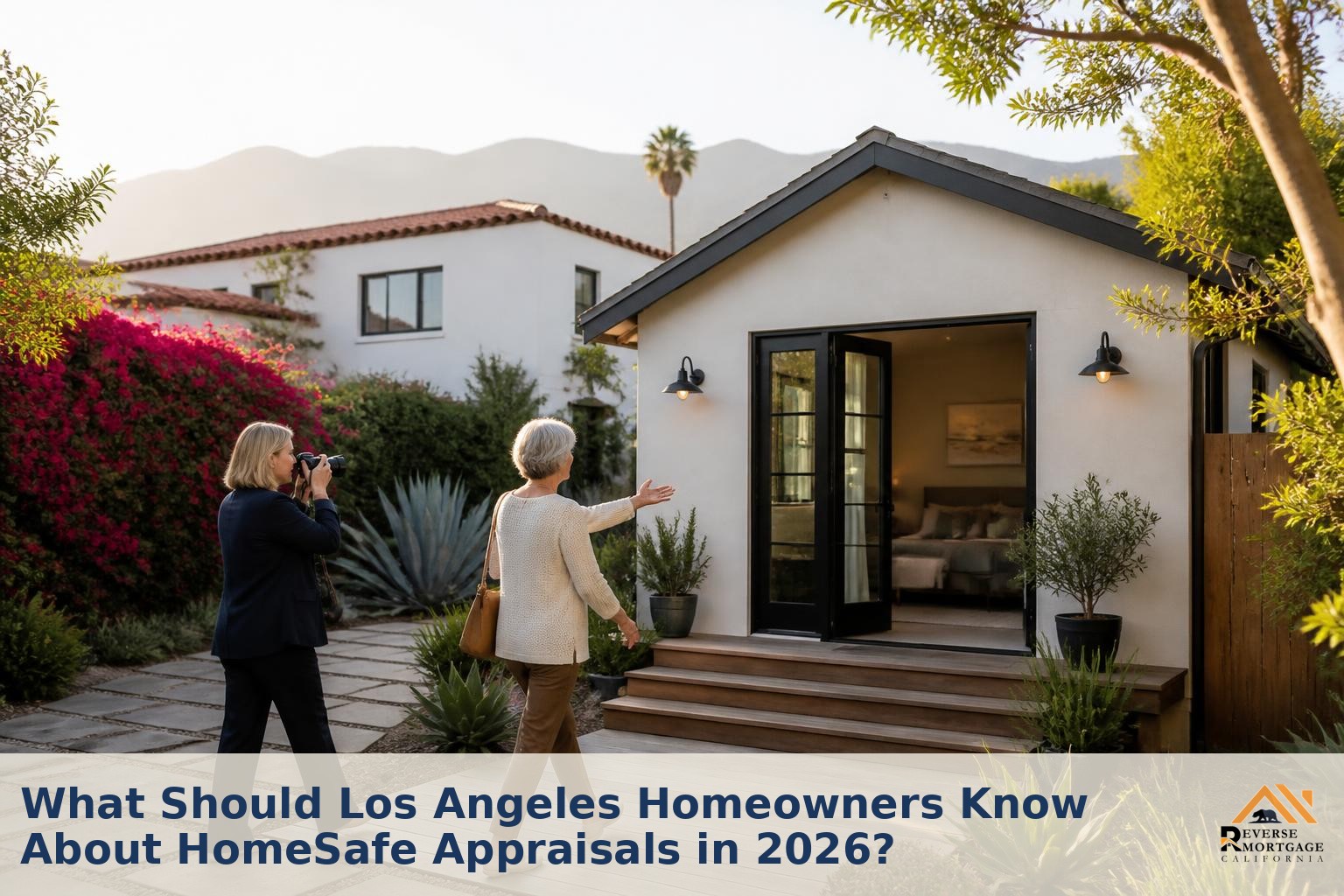
What Should Los Angeles Homeowners Know About HomeSafe Appraisals in 2026?
Last updated: 2026 | Sources: cited program manuals and guidance | Author: George Kfoury, NMLS# 365129
Los Angeles homeowners often approach a reverse mortgage appraisal with two questions: what will the appraiser inspect, and which property details could affect eligibility? Those questions become especially important when a home has an accessory dwelling unit, recent improvements, or an unusual sales history.
HomeSafe is a proprietary reverse mortgage rather than an FHA-insured HECM, so its investor guidelines deserve separate attention. This article explains five appraisal rules drawn from the HomeSafe underwriting manual revised in April 2026, while recognizing that program terms can change and every file receives an individual review.
Introduction
The goal is preparation, not a promise of approval or value. A homeowner can use these points to organize permits, leases, and access to the home’s rooms before speaking with a licensed professional about the current product requirements.
This guide covers five focused questions for Los Angeles homeowners in 2026. Each answer identifies its source inline, distinguishes HomeSafe from HECM where necessary, and offers a planning example without predicting loan approval, proceeds, or appraised value.
1. Is an ADU allowed for HomeSafe?
Answer: A HomeSafe property with an ADU is allowable only if the ADU is legal, permitted, and compliant with zoning regulations.
The three-part standard is important because legality, permitting, and zoning compliance describe related but distinct questions. Homeowners should locate final permits and relevant municipal records instead of relying only on how long the unit has existed.
Source: HomeSafe_Underwriting_Manual.pdf, Appraisals, page 23, Revised April 2026. This citation supports answer 1 in the present Los Angeles guide.
How this looks in practice
Imagine a Los Angeles homeowner who converted a detached garage into a small residence years ago. Before relying on that space as an acceptable ADU, the file would need evidence that the conversion is lawful, permitted, and consistent with applicable zoning; attractive finishes alone do not establish compliance.
For question 1, preparation means supplying complete, accurate records and allowing the lender to apply the current rule to the whole file. No isolated fact here guarantees eligibility, terms, proceeds, or a particular underwriting outcome.
Key numbers
- Revised April 2026
These figures belong specifically to the source for section 1 and should not be extended to unrelated products or circumstances. Ask for confirmation if the application occurs after the cited revision or if the account, property, or family structure differs from the example.
2. Can ADU rental income count for HomeSafe?
Answer: HomeSafe may consider ADU boarder or rental income if documented with two years of tax returns and a current executed lease.
The documentation requirement connects current occupancy with a demonstrated income history. Underwriters may still examine consistency, expenses, and the complete tax record, so two years of returns should not be read as an automatic approval formula.
Source: HomeSafe_Underwriting_Manual.pdf, Appraisals, page 23, Revised April 2026. This citation supports answer 2 in the present Los Angeles guide.
How this looks in practice
Consider an owner receiving monthly rent from a permitted backyard unit. A current lease may show today’s arrangement, but the guideline also calls for two years of tax returns, so a new rental stream without that history may not support the same underwriting treatment.
For question 2, preparation means supplying complete, accurate records and allowing the lender to apply the current rule to the whole file. No isolated fact here guarantees eligibility, terms, proceeds, or a particular underwriting outcome.
Key numbers
- 2 years
- Revised April 2026
These figures belong specifically to the source for section 2 and should not be extended to unrelated products or circumstances. Ask for confirmation if the application occurs after the cited revision or if the account, property, or family structure differs from the example.
3. What interior photos are required for a HomeSafe appraisal?
Answer: HomeSafe appraisals must include interior photos at minimum of the kitchen, bedrooms, bathrooms, and living or family room.
Required room photographs help document condition, quality, and functional use inside the residence. Personal privacy can be protected by removing sensitive items beforehand, but the listed areas still need to be available for the appraiser’s required work.
Source: HomeSafe_Underwriting_Manual.pdf, Appraisals, page 23, Revised April 2026. This citation supports answer 3 in the present Los Angeles guide.
How this looks in practice
A homeowner should expect the appraiser to enter the principal living areas rather than photograph only the street and exterior. Making the kitchen, sleeping rooms, bathrooms, and family or living space accessible helps the inspection proceed without a return visit caused by locked or unavailable rooms.
For question 3, preparation means supplying complete, accurate records and allowing the lender to apply the current rule to the whole file. No isolated fact here guarantees eligibility, terms, proceeds, or a particular underwriting outcome.
Key numbers
- Revised April 2026
These figures belong specifically to the source for section 3 and should not be extended to unrelated products or circumstances. Ask for confirmation if the application occurs after the cited revision or if the account, property, or family structure differs from the example.
4. Can HomeSafe use a BPO or drive-by appraisal?
Answer: HomeSafe does not allow broker price opinions, drive-by appraisals, or other limited appraisals.
A full appraisal provides analysis and inspection detail that a BPO or limited report does not supply. Homeowners should budget time for the authorized process and avoid treating consumer websites as evidence of the final underwritten value.
Source: HomeSafe_Underwriting_Manual.pdf, Appraisals, page 23, Revised April 2026. This citation supports answer 4 in the present Los Angeles guide.
How this looks in practice
An online estimate or a broker’s pricing opinion can be useful for informal planning, yet it does not replace the appraisal required by this program. A quick exterior-only visit likewise would not satisfy a rule that excludes drive-by and other limited valuation formats.
For question 4, preparation means supplying complete, accurate records and allowing the lender to apply the current rule to the whole file. No isolated fact here guarantees eligibility, terms, proceeds, or a particular underwriting outcome.
Key numbers
- Revised April 2026
These figures belong specifically to the source for section 4 and should not be extended to unrelated products or circumstances. Ask for confirmation if the application occurs after the cited revision or if the account, property, or family structure differs from the example.
5. What sales history must a HomeSafe appraisal report?
Answer: The HomeSafe appraiser must analyze and report the subject property’s sales history for the past 36 months and comparable sales history for the past 12 months.
Prior transfers can reveal changes in price, ownership, or transaction circumstances that require explanation. Comparable histories also help the reviewer assess whether a recent sale is reliable market support rather than an unexplained repeat transaction.
Source: HomeSafe_Underwriting_Manual.pdf, Appraisals, page 23, Revised April 2026. This citation supports answer 5 in the present Los Angeles guide.
How this looks in practice
Suppose the subject home transferred between relatives twenty months ago and a comparable sold eight months ago. The appraiser must address the subject’s longer thirty-six-month history and the comparable’s twelve-month history, giving the reviewer context for prior transfers and current market evidence.
For question 5, preparation means supplying complete, accurate records and allowing the lender to apply the current rule to the whole file. No isolated fact here guarantees eligibility, terms, proceeds, or a particular underwriting outcome.
Key numbers
- 36 months
- 12 months
- Revised April 2026
These figures belong specifically to the source for section 5 and should not be extended to unrelated products or circumstances. Ask for confirmation if the application occurs after the cited revision or if the account, property, or family structure differs from the example.
Frequently Asked Questions
Is an ADU allowed for HomeSafe?
The cited HomeSafe rule permits an ADU only when it is lawful, properly permitted, and consistent with zoning requirements. This short response summarizes section 1; the inline source and planning cautions above provide the necessary context.
Can ADU rental income count for HomeSafe?
HomeSafe may consider the income when the file includes two years of tax returns together with a currently executed lease. This short response summarizes section 2; the inline source and planning cautions above provide the necessary context.
What interior photos are required for a HomeSafe appraisal?
At minimum, the appraisal photographs must cover the kitchen, bedrooms, bathrooms, and the living or family room. This short response summarizes section 3; the inline source and planning cautions above provide the necessary context.
Can HomeSafe use a BPO or drive-by appraisal?
No; the program does not accept a broker price opinion, drive-by valuation, or another limited appraisal as a substitute. This short response summarizes section 4; the inline source and planning cautions above provide the necessary context.
What sales history must a HomeSafe appraisal report?
The report addresses thirty-six months for the subject property and twelve months for the comparable sales. This short response summarizes section 5; the inline source and planning cautions above provide the necessary context.
About Reverse Mortgage California
Reverse Mortgage California (NMLS# 2530594) is the consumer-facing DBA and brand of O1ne Mortgage Inc. For this Los Angeles topic, the team provides educational guidance and discusses available reverse mortgage options without promising approval, savings, or a particular financial result.
Call or text (909) 642-8258 or visit reversemortgagecali.com.
Find us on Google for our location, hours, and directions.
About George Kfoury
George Kfoury, NMLS# 365129, has been licensed since 2003 and serves California seniors. He helps homeowners in Los Angeles understand reverse mortgage choices, documentation, and product differences in plain language.
Readers of this homesafe property guide can contact George to discuss their own goals and request current information. A personal conversation can clarify which questions belong with a mortgage professional, housing counselor, attorney, tax adviser, or other qualified specialist.