Reverse Mortgage California Guide
Which HomeSafe Documents Can Los Angeles Seniors E-Sign in 2026?
Last updated: 2026 | Location: Los Angeles | Sources: HomeSafe_Underwriting_Manual.pdf, Electronic Signature Requirements, page 15, Revised April 2026; HomeSafe_Underwriting_Manual.pdf, Electronic Signature Requirements, page 16, Revised April 2026 | Author: George Kfoury, NMLS# 365129
Electronic documents can spare a Los Angeles senior a drive across town, but convenience is only one part of a valid signing process. HomeSafe requires an electronic trail that connects the borrower to the act of signing, and it excludes certain documents from digital execution altogether. A borrower who understands those boundaries can plan technology help without giving away control of identity or consent.
This 2026 article reviews five electronic-signature provisions in the HomeSafe Underwriting Manual revised in April 2026. The rules cover audit logs, closing documents, email access, third-party addresses, and notarized forms. They describe the signing channel, not an overall promise of loan eligibility or approval.
Introduction
An e-signature is more than a typed name on a screen. The delivery system records events intended to show who received the package, whether the person consented, when each action occurred, and how the document was executed. In a mortgage file, that evidence must remain connected to the correct borrower.
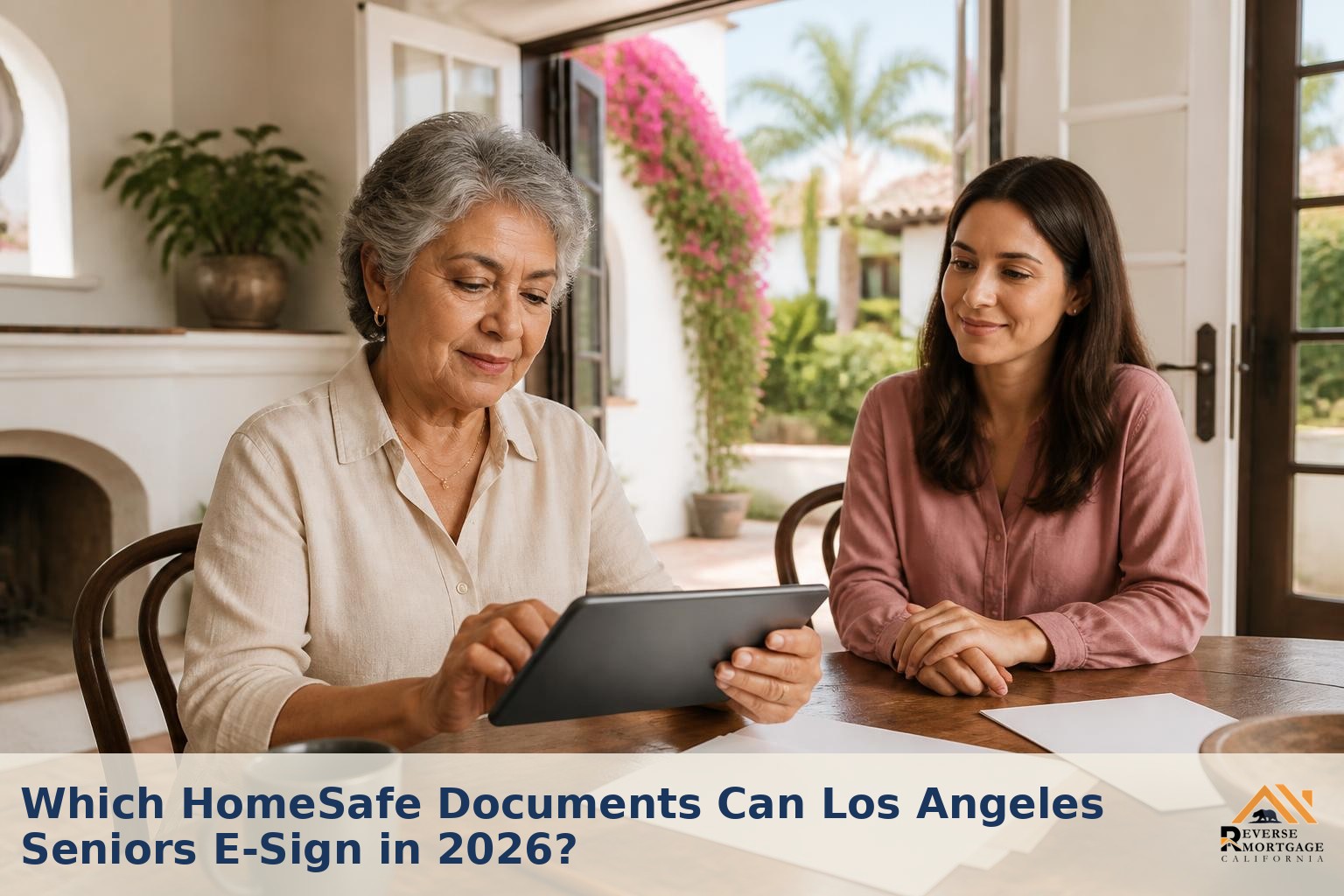
Family members often help older homeowners with devices or accessibility needs. Assistance can be useful, but the senior must still understand the documents and personally control the signing process. Sharing passwords, substituting another person's email, or allowing someone else to click through a package can undermine the very evidence the system is meant to preserve.
HomeSafe is proprietary rather than FHA insured, and its procedures may differ from HECM rules or from another lender's digital workflow. Los Angeles borrowers should ask which specific forms can be signed electronically, which require ink or live execution, and what alternatives are available before a deadline is set.
1. What must a HomeSafe e-signature audit trail show?
Answer: A HomeSafe audit trail must show the borrower's name and IP address, consent, a clear date and time stamp, and proof that the electronic signing occurred.
Together, those data points create a record of identity, permission, timing, and action. A completed PDF without the accompanying trail may not demonstrate the full sequence required by the cited provision.
Source for Los Angeles item 1: HomeSafe_Underwriting_Manual.pdf, Electronic Signature Requirements, page 15, Revised April 2026.
How this looks in practice
A Los Angeles borrower should check that the name in the invitation is accurate, open the package through a trusted connection, and follow the platform's consent steps personally. Unexpected names, unexplained activity, or a link received from an unfamiliar sender should be reported before signing.
Saving the completion certificate can help the homeowner retain a personal record, although the lender determines which system evidence belongs in the official file. Device assistance should focus on navigation and readability, not on another person assuming the borrower's identity.
The loan team should confirm the approved platform and method for the exact document before it is sent.
Key numbers
- Audit components: name/IP, consent, timestamp, and signing evidence
- Guideline revision: April 2026
2. Can HomeSafe closing documents be e-signed?
Answer: HomeSafe closing documents cannot be electronically signed because the program requires live signatures on that package.
Digital execution earlier in the application does not establish permission to e-sign at closing. The manual draws a firm procedural line for final closing papers under this selected rule.
Source for Los Angeles item 2: HomeSafe_Underwriting_Manual.pdf, Electronic Signature Requirements, page 16, Revised April 2026.
How this looks in practice
A senior with mobility, travel, hearing, vision, or scheduling concerns should discuss the closing format well in advance. The settlement team can explain the planned location, acceptable identification, witness or notary needs, and how accessibility accommodations can be handled.
Borrowers should avoid booking travel around an assumed remote closing merely because disclosures arrived online. Confirming the live-signature requirement before dates are promised to movers, caregivers, or family members can prevent avoidable disruption.
Closing logistics need written confirmation because earlier digital steps do not change this execution rule.
Key numbers
- Closing-document e-signatures allowed: none under this rule
- Execution method: live signature
3. Can I e-sign HomeSafe documents if I do not have email?
Answer: A HomeSafe borrower who says that they have no email address is not eligible to receive an electronic-signature package.
This limitation concerns access to the e-sign channel, not a conclusion that the person is automatically ineligible for every HomeSafe transaction. The loan team must identify an appropriate permitted workflow for the documents involved.
Source for Los Angeles item 3: HomeSafe_Underwriting_Manual.pdf, Electronic Signature Requirements, page 15, Revised April 2026.
How this looks in practice
Creating a new account solely to receive documents may be unhelpful if the homeowner cannot access, monitor, or recover it independently. An honest conversation about technology skills gives the lender a chance to explain paper or live-signing alternatives where available.
A Los Angeles senior can still ask a trusted person to help enlarge text or understand device controls, provided the borrower remains the signer and the process follows current instructions. Accessibility support should strengthen informed participation rather than fabricate digital independence.
Borrowers should describe their real access needs so the lender can select a compliant available process.
Key numbers
- Personal email needed for e-sign delivery: yes
- No stated email: e-sign package unavailable
4. Can someone else’s email be used for my HomeSafe e-signature package?
Answer: HomeSafe does not permit e-signature delivery to an address that belongs, or appears to belong, to someone other than the borrower.
The address itself contributes to identity assurance. A relative's convenient inbox can create doubt about who received, reviewed, and executed the documents, even when the family intended only to help.
Source for Los Angeles item 4: HomeSafe_Underwriting_Manual.pdf, Electronic Signature Requirements, page 15, Revised April 2026.
How this looks in practice
The borrower should use a personal address that they can open and secure. If an existing address contains another person's name or is jointly managed, raise the issue with the loan team before invitations are generated rather than changing information after the audit trail begins.
Using somebody else's inbox can invalidate the electronic process according to the evidence set. Correcting ownership details early protects the integrity of consent and avoids repeating a package after important timing periods have started.
Correct the delivery address before signing activity begins to preserve a clean identity trail.
Key numbers
- Permitted delivery owner: the borrower
- Third-party email use: not allowed
5. Can notarized HomeSafe documents be e-signed?
Answer: Any HomeSafe document that requires notarization is excluded from electronic signing under the cited manual rule.
The presence of a notarial requirement controls the signing method in this provision. A form does not become eligible for ordinary e-signing simply because it appears in the same portal as documents that can be completed online.
Source for Los Angeles item 5: HomeSafe_Underwriting_Manual.pdf, Electronic Signature Requirements, page 16, Revised April 2026.
How this looks in practice
Ask the closing or processing team to identify notarized forms before arranging the appointment. The signer can then prepare acceptable identification and confirm where the notary will meet, how originals will be handled, and whether any witnesses are also required.
Los Angeles borrowers should not assume that a broadly available remote-notary service overrides the HomeSafe manual. Product instructions for the actual document and closing must be confirmed by the responsible professionals.
The responsible closing professionals must identify which forms require notarization and live execution.
Key numbers
- Notarized documents eligible for e-signing: zero
- Source page: 16 of the cited manual
Frequently Asked Questions
What must a HomeSafe e-signature audit trail show?
For FAQ item 1, a HomeSafe audit trail must show the borrower's name and IP address, consent, a clear date and time stamp, and proof that the electronic signing occurred. Source for FAQ item 1: HomeSafe_Underwriting_Manual.pdf, Electronic Signature Requirements, page 15, Revised April 2026; the current lender must apply this point to the individual Los Angeles file.
Can HomeSafe closing documents be e-signed?
For FAQ item 2, homeSafe closing documents cannot be electronically signed because the program requires live signatures on that package. Source for FAQ item 2: HomeSafe_Underwriting_Manual.pdf, Electronic Signature Requirements, page 16, Revised April 2026; the current lender must apply this point to the individual Los Angeles file.
Can I e-sign HomeSafe documents if I do not have email?
For FAQ item 3, a HomeSafe borrower who says that they have no email address is not eligible to receive an electronic-signature package. Source for FAQ item 3: HomeSafe_Underwriting_Manual.pdf, Electronic Signature Requirements, page 15, Revised April 2026; the current lender must apply this point to the individual Los Angeles file.
Can someone else’s email be used for my HomeSafe e-signature package?
For FAQ item 4, homeSafe does not permit e-signature delivery to an address that belongs, or appears to belong, to someone other than the borrower. Source for FAQ item 4: HomeSafe_Underwriting_Manual.pdf, Electronic Signature Requirements, page 15, Revised April 2026; the current lender must apply this point to the individual Los Angeles file.
Can notarized HomeSafe documents be e-signed?
For FAQ item 5, any HomeSafe document that requires notarization is excluded from electronic signing under the cited manual rule. Source for FAQ item 5: HomeSafe_Underwriting_Manual.pdf, Electronic Signature Requirements, page 16, Revised April 2026; the current lender must apply this point to the individual Los Angeles file.
About Reverse Mortgage California
For electronic-signature education in Los Angeles, Reverse Mortgage California (NMLS# 2530594) operates as the consumer-facing DBA and brand of O1ne Mortgage Inc. Its process explains document choices in plain language while protecting the homeowner's informed participation.
Call or text (909) 642-8258 or visit reversemortgagecali.com.
Find us on Google for our location, hours, and directions.
About George Kfoury
Licensed in the mortgage industry since 2003, George Kfoury (NMLS# 365129) serves California seniors. He helps Los Angeles borrowers distinguish convenient electronic steps from documents that still require live execution.
Los Angeles seniors can visit reversemortgagecali.com/george-kfoury/ or phone (909) 642-8258 to discuss personal signing and accessibility needs.