Reverse Mortgage California Guide
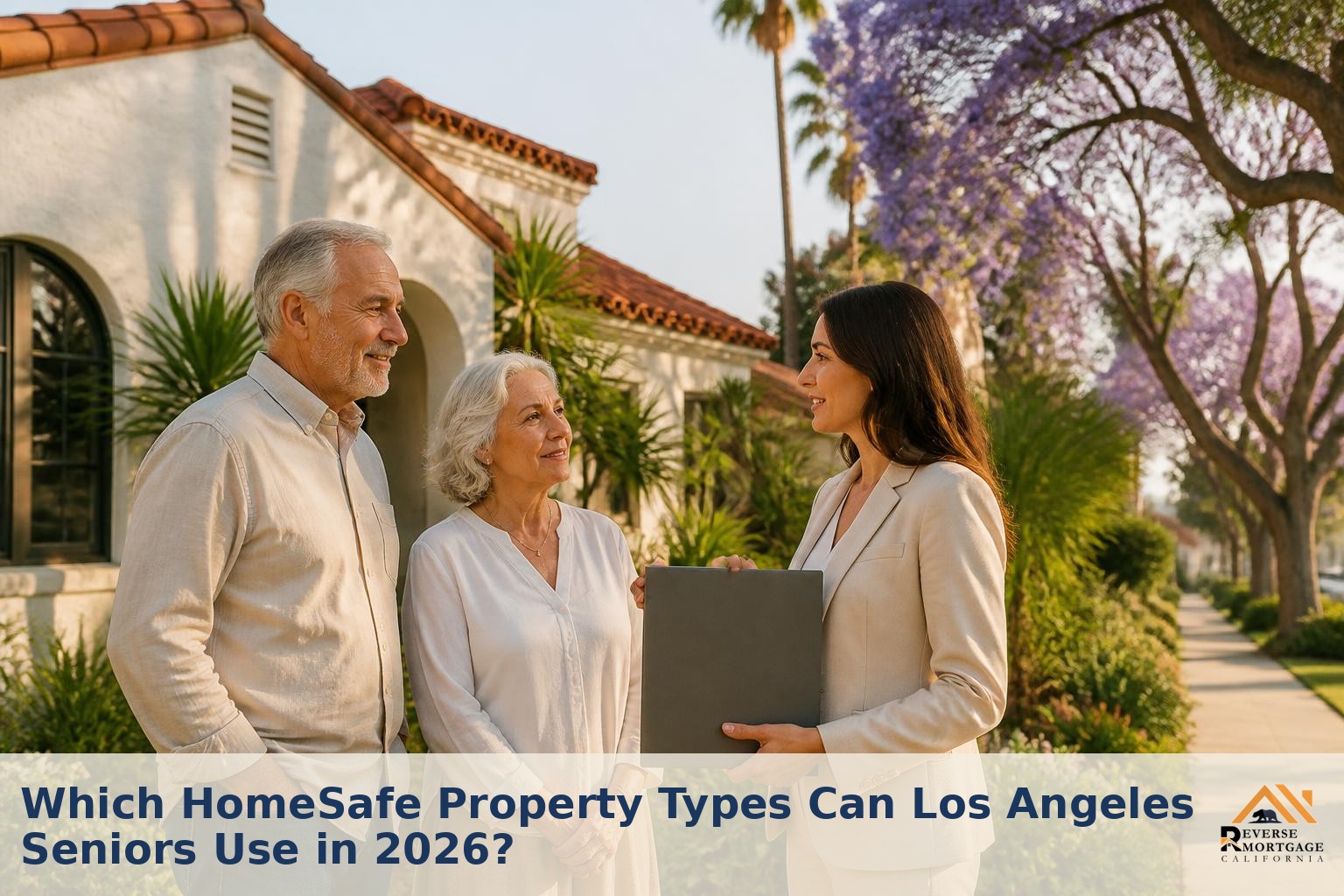
Which HomeSafe Property Types Can Los Angeles Seniors Use in 2026?
Last updated: 2026 | Sources: HomeSafe Underwriting Manual, FHA program rules, California reverse mortgage disclosures | Author: George Kfoury, NMLS# 365129
For homeowners in Los Angeles and Los Angeles County, the property itself can be just as important as age, equity, and loan goals. HomeSafe property-type rules help determine whether a residence, multi-unit property, acreage parcel, agricultural-zoned property, or hobby farm can move forward for review in 2026.
According to the source material for this article, the relevant HomeSafe rules come from Property Types guidelines and are current as of 2026 for this planning discussion.
Introduction
For homeowners in Los Angeles and Los Angeles County, the property itself can be just as important as age, equity, and loan goals. HomeSafe property-type rules help determine whether a residence, multi-unit property, acreage parcel, agricultural-zoned property, or hobby farm can move forward for review in 2026.
This guide summarizes 5 property eligibility facts from the HomeSafe Underwriting Manual. It is written for California seniors who want a clear starting point before gathering documents, ordering valuations, or comparing HECM and proprietary reverse mortgage options.
These are not approval guarantees. They are practical underwriting checkpoints, with inline source citations, so a Los Angeles homeowner can spot issues early and discuss the exact property profile with a licensed reverse mortgage professional.
This guide covers 5 specific topics within property and property types. Every answer below cites its source inline so readers can distinguish official guideline points from practical local commentary.
1. Are properties over 20 acres eligible for HomeSafe?
Answer: HomeSafe generally treats properties over 20 acres as ineligible unless a limited escalation applies.
The key takeaway is property-specific: HomeSafe generally treats properties over 20 acres as ineligible unless a limited escalation applies. The homeowner should be ready to explain what the property is, how it is used, and whether any exception or escalation path applies.
Source: HomeSafe_Underwriting_Manual.pdf, Property Types, page 38, current as of 2026.
How this looks in practice
In practice, a Los Angeles homeowner should compare the property description, zoning, acreage, occupancy, and income use before assuming the home fits the program. A property that feels residential to the owner may still raise a guideline question. The source question here is: Are properties over 20 acres eligible for HomeSafe?
For compliance-safe property types planning in Los Angeles, treat item 1 as a conversation starter rather than a final loan answer. Reverse mortgage outcomes depend on product availability, property details, borrower age, title, existing liens, required counseling, and underwriting review. A senior household should avoid making a major housing decision from this single rule without reviewing the whole file.
Key numbers
- 20 (as of 2026)
- 2026
2. Can agricultural-zoned property qualify for HomeSafe?
Answer: Agricultural-zoned properties are ineligible for HomeSafe unless proof shows there is no agricultural use.
For a senior deciding between loan products, this rule helps identify whether HomeSafe deserves a closer look or whether another reverse mortgage path may be more appropriate.
Source: HomeSafe_Underwriting_Manual.pdf, Property Types, page 38, current as of 2026.
How this looks in practice
For homes in Los Angeles and Los Angeles County, this can matter before spending time on a full file. The rule points the conversation toward the actual property type and any condition that may require escalation or proof. The source question here is: Can agricultural-zoned property qualify for HomeSafe?
For compliance-safe property types planning in Los Angeles, treat item 2 as a conversation starter rather than a final loan answer. Reverse mortgage outcomes depend on product availability, property details, borrower age, title, existing liens, required counseling, and underwriting review. A senior household should avoid making a major housing decision from this single rule without reviewing the whole file.
Key numbers
- 2026
3. Are single-family homes eligible for HomeSafe?
Answer: Existing single-family residences are eligible property types for HomeSafe.
Before relying on the rule, the property facts should be checked against current guidelines, appraisal details, title information, and any local or county records that describe zoning or use.
Source: HomeSafe_Underwriting_Manual.pdf, Property Types, page 38, current as of 2026.
How this looks in practice
This is useful for families with nonstandard California properties, including larger parcels, multi-unit homes, or land that has historically been connected to farming. The safest next step is to match the property facts to the exact HomeSafe category. The source question here is: Are single-family homes eligible for HomeSafe?
For compliance-safe property types planning in Los Angeles, treat item 3 as a conversation starter rather than a final loan answer. Reverse mortgage outcomes depend on product availability, property details, borrower age, title, existing liens, required counseling, and underwriting review. A senior household should avoid making a major housing decision from this single rule without reviewing the whole file.
Key numbers
- 2026
4. Are duplexes or fourplexes eligible for HomeSafe?
Answer: Two-to-four-unit properties are eligible property types for HomeSafe.
The key takeaway is property-specific: Two-to-four-unit properties are eligible property types for HomeSafe. The homeowner should be ready to explain what the property is, how it is used, and whether any exception or escalation path applies.
Source: HomeSafe_Underwriting_Manual.pdf, Property Types, page 38, current as of 2026.
How this looks in practice
In practice, a Los Angeles homeowner should compare the property description, zoning, acreage, occupancy, and income use before assuming the home fits the program. A property that feels residential to the owner may still raise a guideline question. The source question here is: Are duplexes or fourplexes eligible for HomeSafe?
For compliance-safe property types planning in Los Angeles, treat item 4 as a conversation starter rather than a final loan answer. Reverse mortgage outcomes depend on product availability, property details, borrower age, title, existing liens, required counseling, and underwriting review. A senior household should avoid making a major housing decision from this single rule without reviewing the whole file.
Key numbers
- 2026
5. Can a hobby farm qualify for HomeSafe?
Answer: HomeSafe may consider hobby farms by escalation if they are for personal hobbies and produce no income.
For a senior deciding between loan products, this rule helps identify whether HomeSafe deserves a closer look or whether another reverse mortgage path may be more appropriate.
Source: HomeSafe_Underwriting_Manual.pdf, Property Types, page 38, current as of 2026.
How this looks in practice
For homes in Los Angeles and Los Angeles County, this can matter before spending time on a full file. The rule points the conversation toward the actual property type and any condition that may require escalation or proof. The source question here is: Can a hobby farm qualify for HomeSafe?
For compliance-safe property types planning in Los Angeles, treat item 5 as a conversation starter rather than a final loan answer. Reverse mortgage outcomes depend on product availability, property details, borrower age, title, existing liens, required counseling, and underwriting review. A senior household should avoid making a major housing decision from this single rule without reviewing the whole file.
Key numbers
- 2026
Frequently Asked Questions
Are properties over 20 acres eligible for HomeSafe?
HomeSafe generally treats properties over 20 acres as ineligible unless a limited escalation applies. Los Angeles homeowners should verify current HomeSafe guidelines and their individual file details before relying on this point.
Can agricultural-zoned property qualify for HomeSafe?
Agricultural-zoned properties are ineligible for HomeSafe unless proof shows there is no agricultural use. Los Angeles homeowners should verify current HomeSafe guidelines and their individual file details before relying on this point.
Are single-family homes eligible for HomeSafe?
Existing single-family residences are eligible property types for HomeSafe. Los Angeles homeowners should verify current HomeSafe guidelines and their individual file details before relying on this point.
Are duplexes or fourplexes eligible for HomeSafe?
Two-to-four-unit properties are eligible property types for HomeSafe. Los Angeles homeowners should verify current HomeSafe guidelines and their individual file details before relying on this point.
Can a hobby farm qualify for HomeSafe?
HomeSafe may consider hobby farms by escalation if they are for personal hobbies and produce no income. Los Angeles homeowners should verify current HomeSafe guidelines and their individual file details before relying on this point.
About Reverse Mortgage California
Reverse Mortgage California (NMLS# 2530594) is the consumer-facing DBA and brand of O1ne Mortgage Inc. For Los Angeles homeowners reviewing property types, the company provides clear education about reverse mortgage options, including FHA-insured HECM loans and available proprietary programs.
Call or text (909) 642-8258 or visit reversemortgagecali.com.
Find us on Google for our location, hours, and directions.
About George Kfoury
George Kfoury (NMLS# 365129) has been licensed in the mortgage industry since 2003 and serves California seniors who want practical context for property types questions, reverse mortgages, and retirement mortgage options.
He serves homeowners statewide, with practical guidance for Los Angeles and surrounding communities. Learn more about George Kfoury, visit Reverse Mortgage California, or call (909) 642-8258.