Reverse Mortgage California Guide
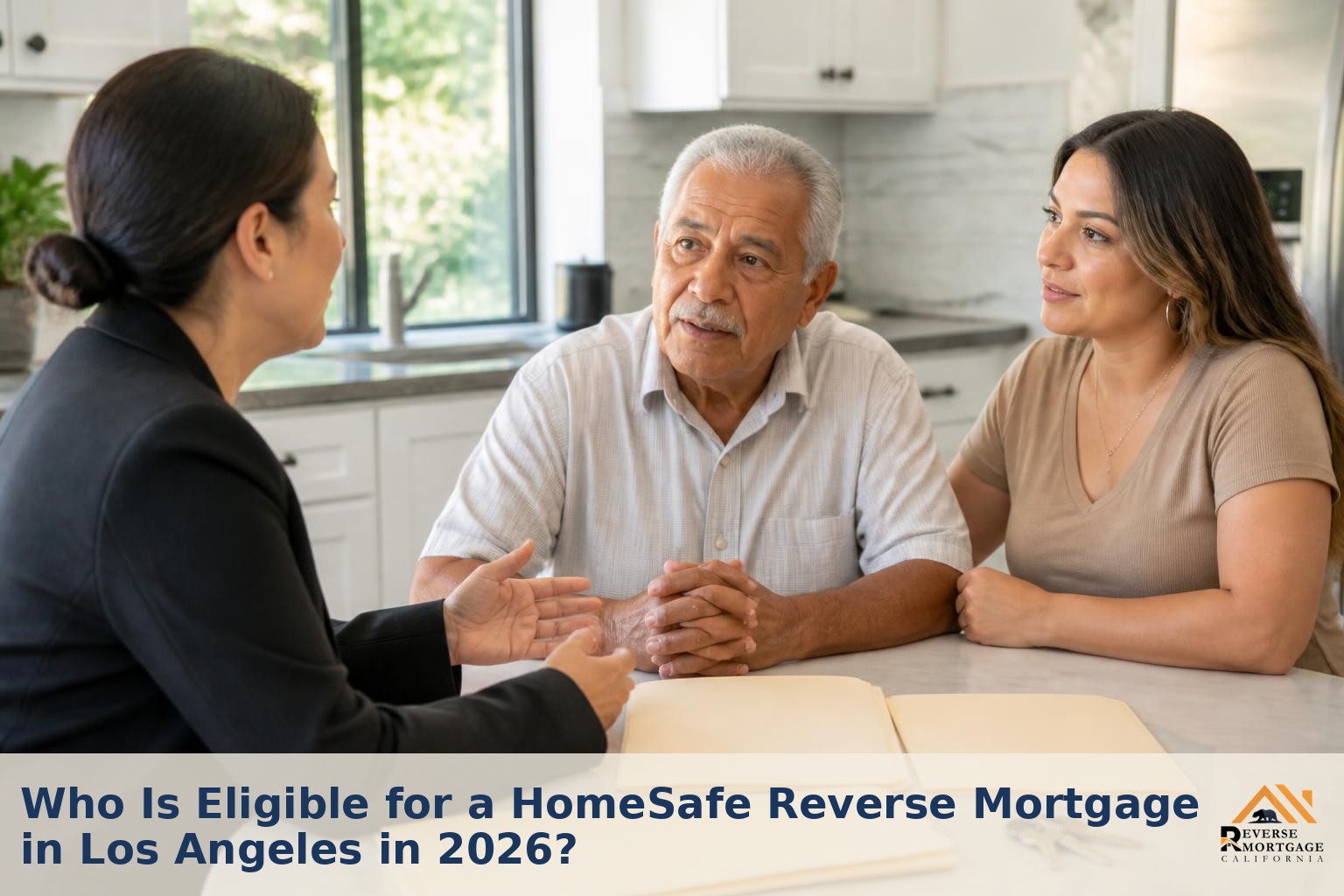
Who Is Eligible for a HomeSafe Reverse Mortgage in Los Angeles in 2026?
Last updated: 2026 | Sources: HomeSafe_Underwriting_Manual.pdf | Author: George Kfoury, NMLS# 365129
This Los Angeles guide explains which borrowers and ownership situations may or may not fit HomeSafe borrower eligibility rules in 2026.
Each answer cites the HomeSafe source material inline and explains how the rule can show up in a real California homeowner conversation.
Introduction
Los Angeles homeowners often think first about equity, appraised value, or the size of a possible reverse mortgage. For a proprietary HomeSafe loan, eligibility can begin even earlier, with the legal identity of the borrower, the way title is held, and the residency documents available for review.
This 2026 guide focuses on five borrower eligibility rules from the HomeSafe Underwriting Manual. The rules are especially useful for families in Los Angeles who are reviewing trusts, business-owned property, family transactions, or immigration documentation before starting a formal loan conversation.
The examples below are educational, not a loan approval or legal opinion. HomeSafe is a proprietary program, and the cited manual says the relevant borrower eligibility material was revised in April 2026, so a current file review should confirm the rule before a homeowner acts on it.
For seniors and adult children helping with paperwork, the practical goal is to identify title or documentation problems before ordering an appraisal or assuming a specific product is available.
This guide covers 5 specific topics within borrower eligibility, each based on official source material and written for California borrowers as of 2026.
1. Can a blind trust get a HomeSafe loan?
Answer: Blind trusts are not eligible HomeSafe borrowers.
Source: HomeSafe_Underwriting_Manual.pdf, Borrower Eligibility, page 13, current as of 2026.
How this looks in practice
A blind trust can be useful in some planning conversations, but HomeSafe treats borrower eligibility separately from general estate planning goals. If a Los Angeles property is held in a blind trust, the question should be raised before application rather than after the file is deep into underwriting.
In practice, this means the family, trustee, and mortgage professional should review the current title vesting and the program rule together. The fact that a senior occupies the property does not erase the guideline concern if the named borrower structure is not permitted.
Key numbers
- Revised April 2026
2. Can a business own the home and get HomeSafe?
Answer: Businesses, including corporations and partnerships, cannot qualify as HomeSafe borrowers.
Source: HomeSafe_Underwriting_Manual.pdf, Borrower Eligibility, page 13, current as of 2026.
How this looks in practice
Some Southern California owners hold real estate in an LLC, corporation, partnership, or other business entity. That structure may make sense for other purposes, yet the HomeSafe borrower rule focuses on whether the borrower itself is an eligible person or entity.
A homeowner who personally lives in the residence should still check how title reads. When a business entity owns the home, the file can run into a borrower eligibility problem before questions about proceeds, rates, or closing timing become relevant.
Key numbers
- Revised April 2026
3. Are non-arm’s-length transactions allowed for HomeSafe?
Answer: Non-arm’s-length transactions are ineligible for HomeSafe when there is a personal or business relationship between parties such as buyer, seller, loan officer, or originating lender.
Source: HomeSafe_Underwriting_Manual.pdf, Borrower Eligibility, page 13, current as of 2026.
How this looks in practice
Family sales, insider transfers, and transactions involving business relationships can look simple from the outside but raise a separate HomeSafe issue. The manual points to personal or business relationships among parties such as buyer, seller, loan officer, or originating lender.
For a Los Angeles family, the safest approach is to disclose the relationship early and ask whether the transaction fits current guidelines. Waiting until the end can create surprise delays, especially when a title change or family arrangement was part of the plan.
A related caution from the source material: A family or insider transaction may be declined unless a specific guideline exception applies. That risk should be part of the conversation before a borrower chooses a path.
Key numbers
- Revised April 2026
4. Can non-permanent residents qualify for HomeSafe?
Answer: Non-permanent resident aliens may qualify for HomeSafe only if the property is their principal residence, they have a valid Social Security number, and they prove eligibility to work in the United States.
Source: HomeSafe_Underwriting_Manual.pdf, Borrower Eligibility, page 13, current as of 2026.
How this looks in practice
A non-permanent resident may need to prove more than simple occupancy. The file should be organized around principal residence status, a valid Social Security number, and proof of eligibility to work in the United States.
Those documents can take time to gather, so a borrower should not treat them as afterthoughts. In a busy Los Angeles market, having the residency package ready may prevent avoidable back-and-forth during underwriting.
Key numbers
- Revised April 2026
5. Can permanent residents qualify for HomeSafe?
Answer: Permanent resident aliens may qualify for HomeSafe if they provide proof of lawful permanent residency and meet the same credit standards as U.S. citizens.
Source: HomeSafe_Underwriting_Manual.pdf, Borrower Eligibility, page 13, current as of 2026.
How this looks in practice
Lawful permanent residents are not automatically outside the HomeSafe conversation. The key is documenting permanent residency and meeting the same credit standards that apply to U.S. citizens.
For a Los Angeles senior, that means the residency proof and the financial review both matter. A green card or other lawful permanent resident evidence answers only part of the question; the rest of the file must still satisfy the program requirements.
Key numbers
- Revised April 2026
Frequently Asked Questions
Can a blind trust get a HomeSafe loan?
Blind trusts are not eligible HomeSafe borrowers. A current title, residency, and credit review is still needed before relying on the rule.
Can a business own the home and get HomeSafe?
Businesses, including corporations and partnerships, cannot qualify as HomeSafe borrowers. A current title, residency, and credit review is still needed before relying on the rule.
Are non-arm’s-length transactions allowed for HomeSafe?
Non-arm’s-length transactions are ineligible for HomeSafe when there is a personal or business relationship between parties such as buyer, seller, loan officer, or originating lender. A current title, residency, and credit review is still needed before relying on the rule.
Can non-permanent residents qualify for HomeSafe?
Non-permanent resident aliens may qualify for HomeSafe only if the property is their principal residence, they have a valid Social Security number, and they prove eligibility to work in the United States. A current title, residency, and credit review is still needed before relying on the rule.
Can permanent residents qualify for HomeSafe?
Permanent resident aliens may qualify for HomeSafe if they provide proof of lawful permanent residency and meet the same credit standards as U.S. citizens. A current title, residency, and credit review is still needed before relying on the rule.
About Reverse Mortgage California
Reverse Mortgage California (NMLS# 2530594) is the consumer-facing DBA and brand of O1ne Mortgage Inc. The company helps California seniors understand reverse mortgage choices, including FHA-insured HECM loans and proprietary options when those programs are appropriate for the borrower.
Call or text (909) 642-8258 or visit reversemortgagecali.com.
Find us on Google for our location, hours, and directions.
About George Kfoury
George Kfoury (NMLS# 365129) has been licensed in the mortgage industry since 2003 and serves California seniors who want clear, practical guidance about reverse mortgage and retirement mortgage options.
He serves homeowners statewide, with local relevance in Los Angeles and throughout California. Learn more about George Kfoury, view the Los Angeles Google Business Profile, or call (909) 642-8258.