Reverse Mortgage California Property Guide
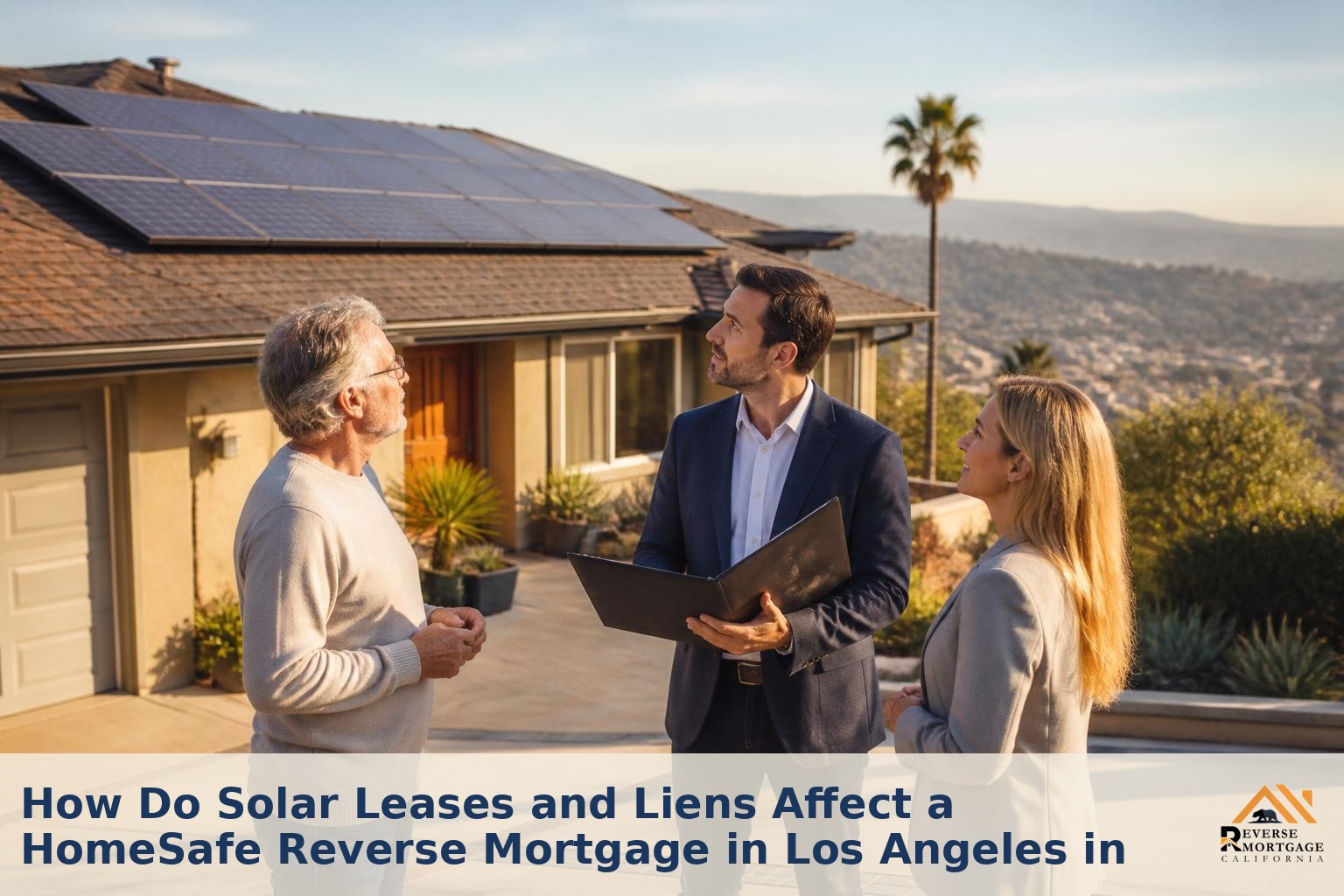
How Do Solar Leases and Liens Affect a HomeSafe Reverse Mortgage in Los Angeles in 2026?
Last updated: 2026 | Source: HomeSafe Underwriting Manual, revised April 2026 | Author: George Kfoury, NMLS# 365129
Solar equipment can lower electric bills, but its contract and financing documents may matter just as much as the panels when a Los Angeles homeowner applies for a HomeSafe proprietary reverse mortgage. An appraiser, title reviewer, and underwriter may each examine a different part of the arrangement.
This 2026 guide separates five issues that are often blended together: leased equipment, borrower-owned systems, financed solar liens, transfer restrictions, and recorded UCC filings. HomeSafe is a proprietary product rather than an FHA-insured HECM, so its current investor rules control and can change.
Introduction
Los Angeles County has homes with many kinds of solar arrangements. One owner may have bought a system outright, another may make payments under a loan, and a third may purchase power from a provider under a power purchase agreement. Those arrangements can produce different valuation and title results even when the rooftop equipment looks identical.
A useful first step is to collect the signed solar agreement, recent statement, payoff information, and any recorded filing before the appraisal or title review begins. Early document review does not guarantee approval, but it can reveal whether the system is personal property, a fixture, collateral for a debt, or subject to transfer conditions.
The five answers below summarize the HomeSafe Underwriting Manual revised April 2026. They are educational, not a promise of eligibility, proceeds, value, or closing. A loan professional must compare the current program, title report, appraisal, and complete borrower file.
1. Do leased solar panels count toward HomeSafe property value?
Answer: No. A HomeSafe appraiser must exclude leased solar mechanical systems and components from the property's market value.
Source: HomeSafe_Underwriting_Manual.pdf, Solar – Leases, Liens, and Power Purchase Agreements, page 133, revised April 2026
How this looks in practice
Suppose a Los Angeles homeowner pays a solar company each month and does not own the equipment. The panels may still provide household energy, yet the appraiser cannot treat that leased system as an asset belonging to the real estate. Comparable-sale analysis and the remaining physical property support the valuation instead.
The distinction is important when a homeowner expects every improvement on the roof to raise appraised value. A lease can provide practical utility without contributing HomeSafe collateral value. The signed agreement should be reviewed because ownership language, payment duties, and end-of-term options can differ among providers.
Key numbers
- Page 133: valuation rule
- April 2026: manual revision
There is no automatic dollar adjustment or standard percentage in this rule. The core test is ownership: leased components are left out, while the appraiser still develops an independent opinion of the home’s eligible market value.
2. Can an owned solar system add value for HomeSafe?
Answer: Potentially. The appraiser may include solar value only when the borrower owns the system in full and it is legally part of the property.
Source: HomeSafe_Underwriting_Manual.pdf, Solar – Leases, Liens, and Power Purchase Agreements, page 133, revised April 2026
How this looks in practice
An owner who paid cash for panels and has no remaining solar debt is in a different position from a customer under a lease. Documentation should show that the borrower owns the equipment and that the system is attached to the real estate in a legally recognized way. The appraiser then decides whether market evidence supports any contribution to value.
Permission to consider a system does not mean its invoice price will be added dollar for dollar. Los Angeles buyers may value solar differently according to age, output, condition, utility savings, and neighborhood evidence. The appraiser, not the homeowner or loan officer, develops the supported adjustment.
Key numbers
- 100% ownership: threshold for consideration
- Page 133: governing section
Full ownership is the gateway condition, not a guaranteed valuation formula. Even after ownership is established, the recognized amount can be lower than the original installation cost or zero if the market data does not support an adjustment.
3. When may a solar creditor file a UCC-3 after HomeSafe closing?
Answer: When HomeSafe proceeds pay off financed solar, the creditor may file the UCC-3 after receiving payoff funds, subject to a post-closing condition confirming the release.
Source: HomeSafe_Underwriting_Manual.pdf, Solar – Leases, Liens, and Power Purchase Agreements, page 134, revised April 2026
How this looks in practice
Consider a borrower whose solar loan will be satisfied from the reverse mortgage closing. The creditor may be unwilling to terminate its filing before money arrives. The guideline accommodates that sequence by allowing the release filing afterward, while the loan file carries a condition requiring evidence that the termination was completed.
This is a coordinated payoff process, not permission to ignore a lien. Accurate creditor contact information, a current payoff demand, and clear instructions help the settlement team track the release. Timing varies by creditor and recording office, so borrowers should not promise a specific filing date without confirmation.
Key numbers
- UCC-3: termination filing
- Page 134: payoff procedure
The significant sequence has two stages: payoff funds are delivered at closing, then the creditor files the UCC-3 and the post-closing condition is cleared. Individual settlement requirements may add documentation.
4. Can solar transfer restrictions make a HomeSafe property ineligible?
Answer: Yes. A solar lease or power purchase agreement can make the property ineligible when its transfer restrictions conflict with HomeSafe guidelines.
Source: HomeSafe_Underwriting_Manual.pdf, Solar – Leases, Liens, and Power Purchase Agreements, page 133, revised April 2026
How this looks in practice
Some contracts require a future buyer to qualify with the solar provider, assume payments, or obtain consent before taking title. An underwriter reviews whether those conditions interfere with acceptable transfer of the collateral. A restriction that cannot be reconciled with program requirements can stop the application even if every payment is current.
Los Angeles homeowners should request the complete agreement rather than rely on a salesperson’s summary from years earlier. Amendments, exhibits, and assignment provisions may contain the decisive language. If a problematic term can be changed, the provider must document the change in a form acceptable to the lender and title company.
Key numbers
- 1 contract review: required for the arrangement
- Page 133: transfer standard
No single payment amount decides this issue. The question is legal: whether the agreement limits transfer in an unacceptable way. Because proprietary rules can be revised, the current manual and actual contract must be read together.
5. What happens when a solar UCC-1 is recorded on the HomeSafe property?
Answer: A UCC-3 release is required before closing when a UCC-1 for a solar lease or power purchase agreement is recorded against the subject property.
Source: HomeSafe_Underwriting_Manual.pdf, Solar – Leases, Liens, and Power Purchase Agreements, page 134, revised April 2026
How this looks in practice
A title search may reveal a UCC-1 even when the homeowner thinks of the arrangement only as an electric-service contract. The filing can signal a secured interest connected to solar equipment. For a lease or PPA, HomeSafe requires the corresponding termination to be completed before the new loan closes.
This rule differs from the post-closing accommodation for solar financing that is paid off through settlement. Borrowers should let the title and lending teams identify which scenario applies rather than assuming every filing follows the same timeline. Obtaining provider cooperation early can prevent a late closing delay.
Key numbers
- UCC-1: existing financing statement
- UCC-3: required release document
The operative deadline is before closing for a recorded UCC-1 tied to a lease or PPA. Recording turnaround and provider response times are not fixed by this fact, so the release request should begin as soon as the filing is found.
Frequently Asked Questions
Do leased solar panels count toward HomeSafe property value?
Leased solar equipment is not included in HomeSafe market value because the borrower does not own the system. The lease still needs review for title and transfer terms.
Can an owned solar system add value for HomeSafe?
An appraiser may consider a fully owned solar system that is legally part of the property, but any added value must be supported by the appraisal rather than assumed from cost.
When may a solar creditor file a UCC-3 after HomeSafe closing?
A creditor can file the UCC-3 after closing when the solar debt is paid from closing proceeds, but the file must retain a condition to verify the release.
Can solar transfer restrictions make a HomeSafe property ineligible?
Yes. If a lease or PPA limits transfer in a way that conflicts with current HomeSafe rules, the property can be ineligible unless the issue is acceptably resolved.
What happens when a solar UCC-1 is recorded on the HomeSafe property?
A recorded solar UCC-1 connected with a lease or PPA must be released by UCC-3 before HomeSafe closing under the cited guideline.
About Reverse Mortgage California
Reverse Mortgage California (NMLS# 2530594) is the consumer-facing DBA and brand of O1ne Mortgage Inc. Its team helps California homeowners organize questions about property eligibility, title, and reverse mortgage choices before they make a decision. No educational article can determine approval, value, proceeds, or final terms for an individual application.
Call or text (909) 642-8258 or visit reversemortgagecali.com.
Find us on Google for our location, hours, and directions.
About George Kfoury
George Kfoury (NMLS# 365129) has held a mortgage-industry license since 2003 and serves California seniors who want understandable guidance about reverse mortgages. He brings local awareness to property questions while encouraging homeowners to verify current program details.
He works statewide and understands the questions that arise when Los Angeles properties have solar contracts or recorded filings; readers can learn more about George Kfoury or call (909) 642-8258.